
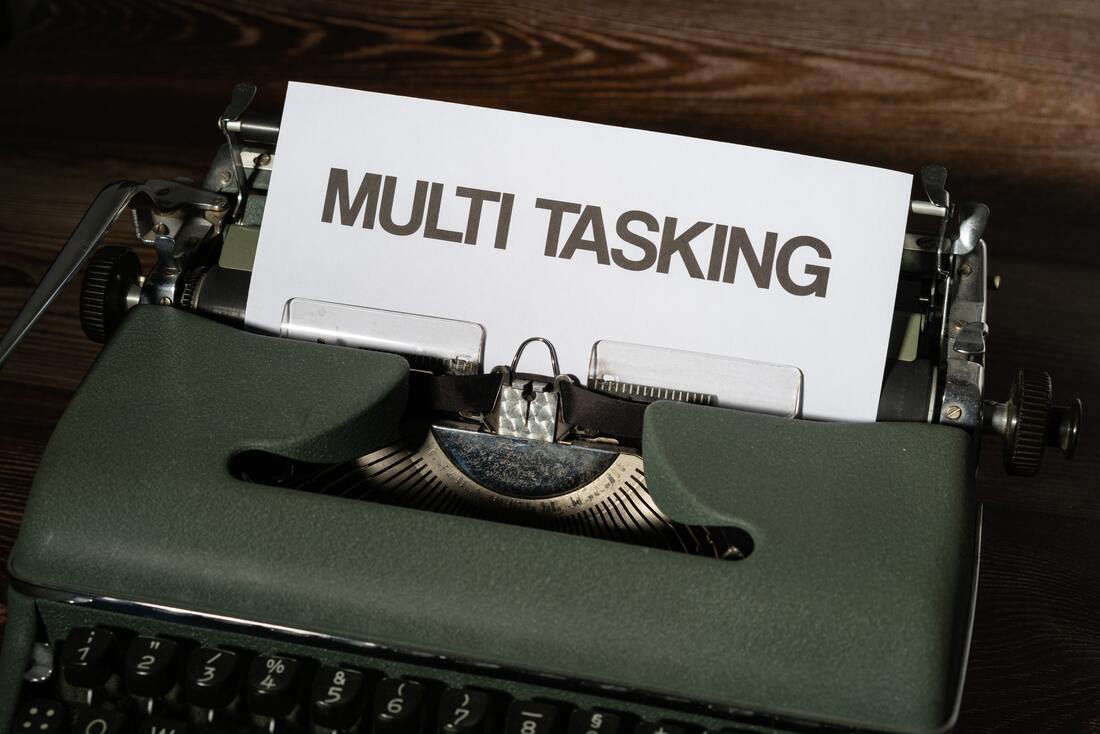
Why Single-Tasking Improves Mental Health, Focus, and Stress Levels in Ohio AdultsIn today’s fast-paced world, multitasking is often worn like a badge of honor. Employers may list it as a required skill. Productivity culture praises it. Many adults in Ohio tell me they feel pressure to constantly juggle tasks, emails, conversations, errands, parenting, and work responsibilities...all at once!
But here’s the truth: multitasking is for computers, not humans. The Origin of “Multitasking” The term multitasking originated in the 1960s during the rise of computer technology. It described a computer’s ability to process multiple tasks simultaneously. Somewhere along the way, we adopted that same expectation for ourselves. But humans are not computers. Our brains are designed to focus on one task at a time. When we try to split our attention, we aren’t actually multitasking, rather we are task-switching. And task-switching comes with a cost. Why Multitasking Increases Stress and Anxiety If you don’t believe multitasking doesn’t work, consider this: How many things can you truly finish at the exact same moment? Completion only happens one task at a time. When your focus is divided among multiple responsibilities, your nervous system shifts into a stress response. Many adults I work with in individual therapy across Ohio report feeling:
This may actually be a simple working definition of stress: Having too much to do and too many things to focus on at once, without the capacity to complete them one at a time. When we constantly divide our attention, our brains never fully “arrive” anywhere. There is no sense of resolution, only interruption. The Mental Health Benefits of Single-Tasking Now imagine this instead: You focus on one task. You give it your attention. You think clearly. You complete it. There’s a natural rhythm to single-tasking. It allows your mind to settle. You can relax into the process. You reach a resolution. You experience a sense of completion. And that completion? It’s regulating for your nervous system. Adults who practice focusing on one task at a time may notice:
Single-tasking isn’t about doing less. It’s about doing things with intention. Practical Ways to Stop Multitasking If you live in Ohio and feel chronically overwhelmed, here are a few small shifts to try:
Even small changes can significantly reduce stress. Slowing Down Is Not Laziness, It’s Regulation In therapy at Turning Inward Counseling, I often help adults explore how productivity, pressure, and perfectionism contribute to stress and anxiety. Many of us were taught that doing more at once means we are high performers. But, being scattered is not the same as being effective. You are allowed to focus. You are allowed to complete one thing at a time. You are allowed to move at a human pace. Aah, doesn't that feel better. Tracy Hunt, MSEd, LPCC Turning Inward Counseling Individual self-pay therapy for adults in Ohio www.turninginwardllc.com
0 Comments
Your comment will be posted after it is approved.
Leave a Reply. |

|
RSS Feed